Tuesday, 12 April 2016

Green Gym has (bramble)balls


By the session leader

I did not know that the hill we had worked on before was called Bald Hill.   Wishful thinking perhaps?  Or maybe once upon a time it was bald, but the brambles and thorn have been doing their best to give it a decent head of hair.

Today we welcomed a new site warden, Kate, who took us to a different part of the hill from where we had worked last time. 
 
This had at one time been an area where ponies were expected to graze.  So the site of a beautiful yew tree had been fenced off to stop ponies poisoning themselves on the yew.  Then plans changed.  The ponies never made an appearance.  Brambles, thorns, and grass took advantage and completely took over the site, the fence, and the surrounds.

Our task was to clear and burn as much of the scrub and bramble as we could, but – to the disappointment of some Green-Gymmers – not to take down the fence itself.  Cutting back vegetation had to take priority, as it had to be done before nesting season, which will be very soon.
 
Which are the best tools for clearing such a mixture?  Shears could cut the grass and thinner brambles, but loppers were needed for the thicker brambles and thorns, while a dashel basher was useless.  A slasher could also be useful, but only where there was more room to take a good swing without endangering fellow-workers: sometimes a pause had to be inserted.

Ed: On the way over, from RV point to work-site, someone asked if the view would be good where we would be working.  “Absolutely marvellous!” came the reply.  This was the view from where I was working:

Though I suppose it became more of a view once Green Gym got to work:

With lovely weather, the usual enthusiasm, and disregard of scratches, the team made good progress in hacking the scrub off. 

  
A bonus: some of the fence did need to be dismantled, so that there was room for a bonfire to dispose of our cuttings.


A much needed break, an opportunity to enjoy the Red Kites’ flying display – and time to admire the famous view: 


Then the team had to carry or roll reluctant piles of cut scrub to the fire.  [Ed: The ‘piles’ were soon dubbed ‘(bramble)balls’ by other volunteers looking on in admiration.]  Getting the largest bramble-ball safely on to the small fire was the work of several pairs of hands:  


Next time, perhaps we shall be allowed to take down the rest of the fence, but we have heard tell of another volunteer group scheduled to work at the site on Thursday.

Thursday, 7 April 2016

Seeds of Love


By the session leader:

Seeds with love or at any rate, wildflower seeds, including cornflower, scattered with a gentle blessing on to soft ground lovingly prepared for them: that was the main task for us this week.

The tools laid out ready for us give an idea of the scale of the job …
                            
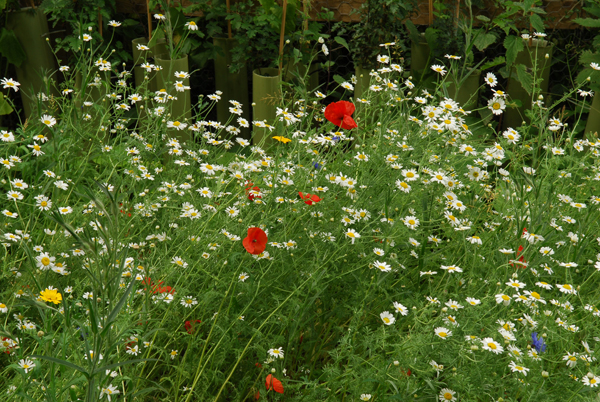
and photographs from last summer show what we may hope for IDC:
The results of our work at the exact same spot last year

“The best show of wildflowers we’ve ever had”

There were times during the session when all twelve volunteers were engaged on the wildflower front, with the session leader following the excellent principal of leading by example:


‘Lifting and sifting’ was the name of the game: some of us lifted the soil with forks/spades (aka “plonk, dig and turn”); others winkled out the young grass, which apparently grows too vigorously to be allowed in a wildflower meadow (“shake, rattle and roll”).  Notice the broken fork, giving rise to calls for “fork handles” – even so, still usable, indeed possibly the best tool for the job.  Meanwhile, another fork broken in use in a previous session had been dutifully mended by our wonderful Tools Officer, and was proving well fit for purpose:

One special plant had managed to reseed itself and regrow.  This was duly rescued and replanted:

Posts were also driven into the ground, so that the area can be roped off.  It is hoped this will deter horse-riders from letting their mounts trample over the meadow-to-be.

By tea break, the wildflower-patch team reckoned they were just over half way.  


Thankfully, after the break reinforcements were available, for in the course of the morning there were other small tasks, carried out by detachments from the main force.  On the whole, the session leader just let us in the satellite group(s) just get on with it, unless we summoned help.  Everybody’s business is nobody’s business,” as the down-to-earth folk of Wisconsin say.  These jobs were largely completed by tea-break.

The team working on clearing sections of ivy, which had potential to overhang the public right of way, had discovered (then re-covered) this Long-Tailed Tit’s nest: 
Site staff were able to tell us that the birds use lichen and cobwebs to construct these remarkable little homes.
                               
On the other side of the bridleway, vegetation either side of pathways for the local forest school had been cut back – a task requiring the volunteer to view the ground from PoV of user, and trim branches accordingly.  The trick in this situation is not to leave spikes ready to poke in the eye someone who is only 3-4’ high. 

Oh and a bramble bush was “rejuvenated”, ie razed to the ground, on the assurance that it will grow back with renewed vigour:
Going

Going

Gone

For our finale, all Green-Gymmers present on site joined together in scattering the wild flower seed, and wishing it well:


Today’s quiz: what’s this?  [Editor: I don’t know either.]