By ‘C’:
There was no
doubting Green-Gymmers’ enthusiasm signing up for this session: “I like scrub
clearing!” volunteered one.
The
ramparts, from which scrub was to be removed, were the defensive earthworks of
an Iron Age fort known locally as Sinodun Camp. So there we were – a full
round dozen of us – doing as probably our ancestors had been obliged to do at
regular intervals when the base was operational: scrub-bashing all along the watchtower.
Armoured
gloves our forebears may have had, but they probably did not have Kevlar material.
– And neither did we until this morning and the chance to try out a batch of
new, allegedly thorn-proof (“stab-proof”) gloves which had been bought by Earth Trust:
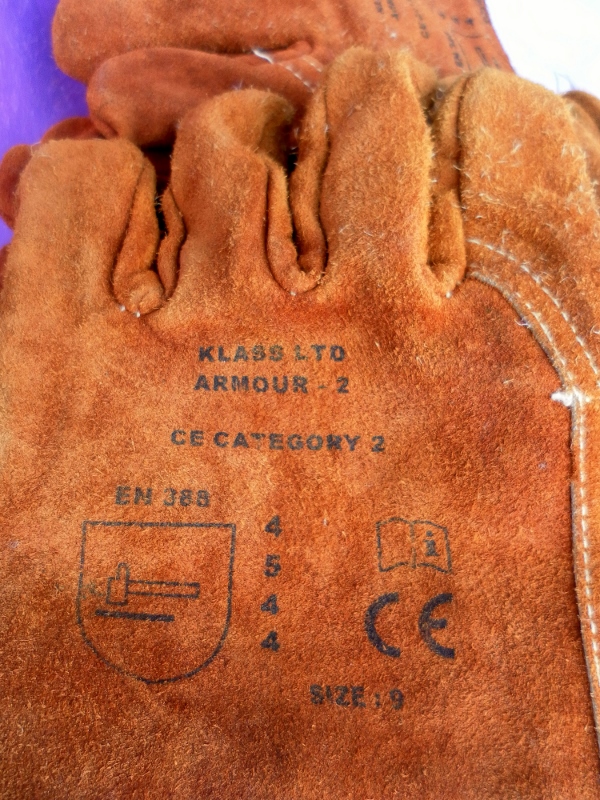
Gloved and
tooled up, some volunteers went for the softer stuff in the ditch – nettles
mostly – which could be slashed very satisfactorily with a good long swing of
the arm:

Others
headed straight up the slope – the hard way, cutting down all before them with
shears and loppers:

A few made
their way round, via a path, to begin the task from the top of the ramparts (“better
views”). Here, it seemed to not so much
a question of which tool to use, but whether to use a tool at all:


The scrub
was so varied that several volunteers reported that one moment they would be
tackling nettles, which could be slashed.
The next they would be up against a mature thistle, which called for
shears. After that, they might be faced
with an infant thorn-bush, which called for loppers or pruning saw. Of whatever
variety, there was an awful lot of it – scrub, that is – to be cleared. Some workers almost disappeared from view:

The slope
itself posed its own challenges. It made
for an interesting test of balance:

Soon the
call could be heard, “You can see where we’ve been!” Those who had chosen to proceed directly up
the slope, were the ones best able to judge their own progress – watched over
by a Red Kite:
 |
| Site warden, on quality control: “That is perfect!” |
Even those
three, however, travelling up the slope, seemed to find it hard to credit as
they neared the top:

And having
finally reached the upper rampart walkway, they proceeded back down via the
path, and started all over again.
Tea-break
was most welcome today! Re-fortified by
tea/coffee + cake (rather than hot pretzles),
more volunteers began to tackle the task of collecting the cut vegetation for eventual
disposal via a bonfire:


The
volunteer in the background: not collapsed in a heap, nor even metaphorically
lying down on the job – just crawling towards the target from the best
angle. As far as I know, no volunteer
was to be seen upside down over the course of the morning, although I am told
that one Green-Gymmer rolled gently down the slope at one point – no harm done.
We still
believe that doing good things for our health should be fun. Indeed you could say that Green Gym is the exact opposite of the medical model of approaching health (“Hey that's my aspirin!”). So, as usual, there was some lively chatter as we
worked. Some revolved around the subject
of the weekend’s Bunkfest, at which some members had been on stewarding or
donation-collecting duty. The headline
act on Saturday evening was said to have been quite good – some Québécois outfit I had never heard of before.
Green-Gymmers
being who we are, as we worked and chatted, we were also very solicitous towards the non-plant species encountered:


Given our
location, and mental images (probably entirely fanciful) of Iron-Age ancestors holding
out against Roman legionaries, it was entirely understandable that there was also
some joking about whether the Roman Army had come up with the idea of
Kevlar. After all, as is well known, the Romans did invent rather a lot of things.
Meanwhile, care
was also taken in regard to those plant species not condemned to be
removed. Early autumn it may have been,
but some wildflowers are still going strong:

To complete
the delight of the morning – for those who were not staying on – the weather
was decidedly varied, but pleasant. The
wind was strong. One wonders how creatures which look so frail, such as
butterflies & moths, can fly perfectly well in such conditions. Being a southwesterly, however, ie blowing
towards, not from the north, the
flow of air was mild in temperature.
At session
end, we could look back and realise the scale of the task. Ours was only the
first of 8 (eight) work-parties scheduled to work on rampart-clearance this
season.
It was also time to review the
performance of the gloves. Many of us
had been seriously impressed, but one Green-Gymmer was ruefully contemplating his sore hand, and reporting that one thorn had got through:

For those
who were able to stay on a little bit longer, there was an extra treat: helping
with the moving of a small flock of sheep.
They really aren’t the brightest of creatures: a few threads short of a
sweater, as they say in America. So,
when sheep are being moved along the public road, even a short distance, it is
good to close all gates which can be, and to post people along the route to
block off obvious places where they could deviate from the straight &
narrow.
Two of us extras
were stationed, for instance, at a junction.
The positioning was finely judged, in relation to the war-memorial:

If we kept
behind the line of that, then we were not so close as to deter the sheep from
walking straight past (as they were meant to), but we were close enough to
prevent them from wandering down towards the next village. Oh and we were to stop any traffic.
Not a lot of
traffic-halting was required on this stretch of highway ...

and the
sheep did indeed obediently trot straight past our location:

It may have
been a different story further up the lane, but at the end of the operation we
saw the last one safely in to their new pasture:


